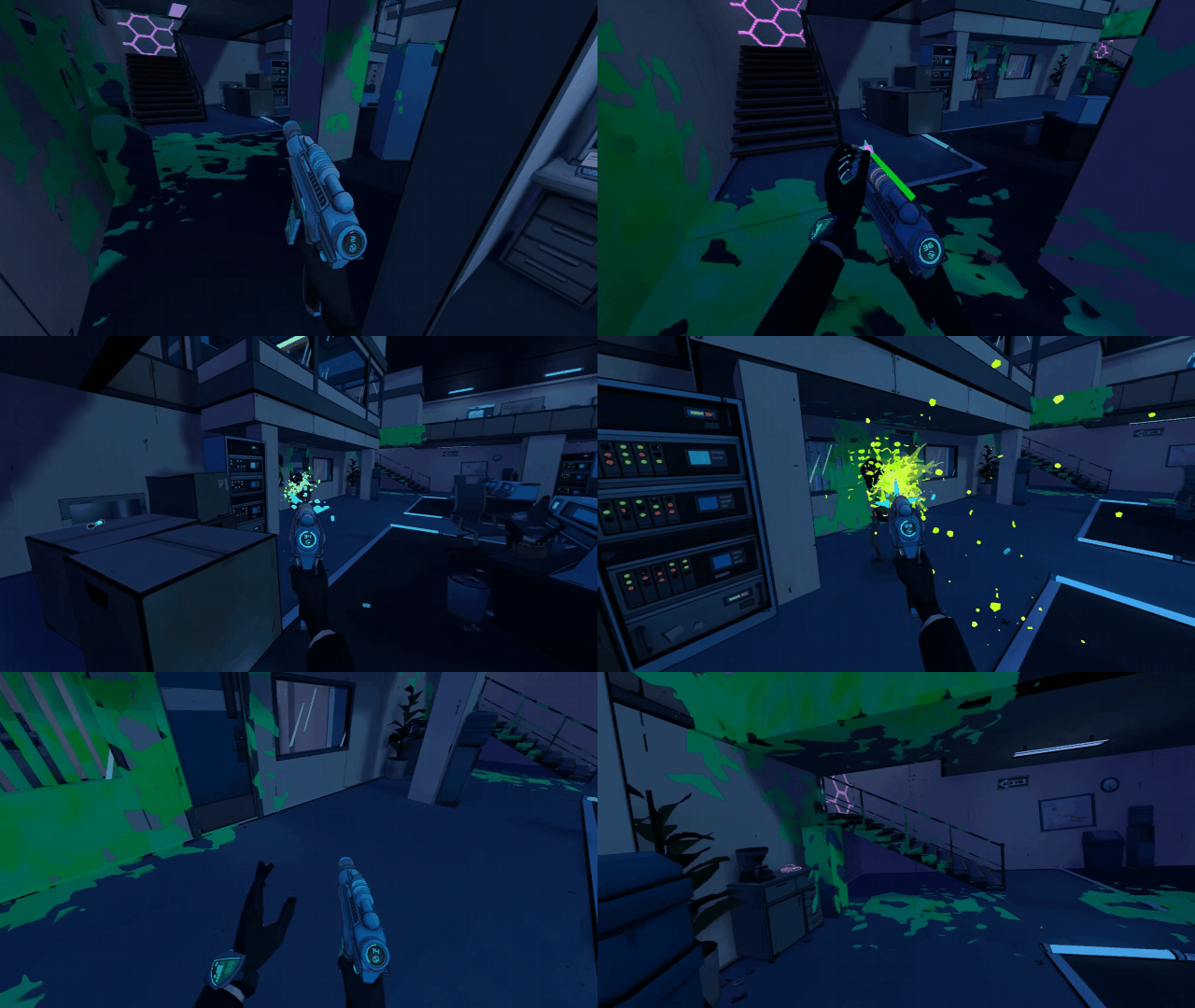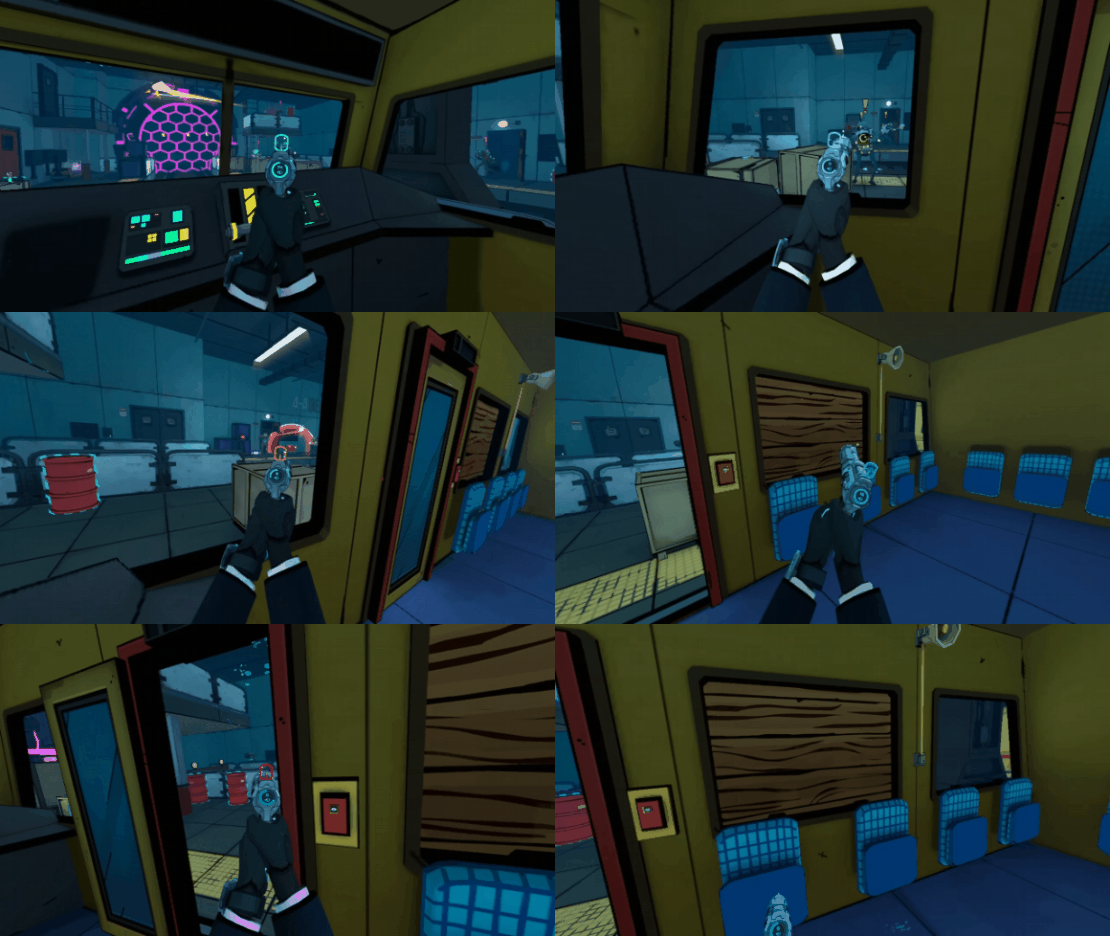
MEN IN BLACK: MOST WANTED
New York, 1995.
You are Agent I of the Men In Black. A race of shapeshifting aliens has infiltrated every corner of the city, wiped your memory and made an attempt on your life.
Frankly, it’s embarrassing.
Partnered with the enigmatic Agent L, you are charged with repelling this new threat while confronting the most dangerous aliens on the planet: MIB’s Most Wanted.
ORIGINAL STORY
Set in the early 1990s, uncover a new chapter in the MIB universe with new characters and classic cameos.
HIDE IN PLAIN SIGHT
Complete your paranormal investigations under the public’s nose. But keep your gadgets hidden.
STEALTH AND ACTION
Battle the Cylathian menace through streets, labs, skyscrapers and more using classic MIB weapons and gadgets built for VR.
SOLO AND CO OP PLAY
Play through the story in single-player, or co-operate with another Agent in Invasion mode.
Project Details
-
Role: Senior Game Designer (AI and Combat)
-
Developer: Coatsink
-
Genre: VR FPS
-
Engine: Unity
-
Platforms: Meta Quest 2, Meta Quest 3
-
Date: February 2023 - December 2025
-
Website: https://coatsink.com/games/men-in-black-most-wanted
My Contribution
From my experience developing the Raptor AI for Jurassic World Aftermath, I was given the responsibility to take charge of AI and combat in Men In Black: Most Wanted. I worked closely with the programming team to develop the various states and behaviours for behaviour trees to create different types of friendly, enemy, and boss NPCs. When doing this, on top of functionality it was important that the behaviour trees and their content were easy to understand, so anyone in the team could create their own or diagnose bugs with little to no help.
During this time, I also worked on several other systems relating to AI and their behaviours:
-
Perception: How AI senses the player through sight and sound, which drives much of their decision-making.
-
Informing: Allows AI to share information gained through their senses with one another, such as the location of the player during combat.
-
Movement: How an AI moves when it patrols, investigates, and repositions when in combat. The latter being the most intricate, with the AI considering at each valid position when their conditions to move have been met if they'll have cover there or not, line of sight of the player, be at its preferred distance to the player, if they'll be crossing into the line of fire when moving, if it's better or worse than their current position, and more. This then generates a score, with the highest one being the position they move to.
-
Barks: Context-sensitive VO used to telegraph an AI's actions to the player (eg. deciding to flank or reload), giving them the information and time to react. We also take advantage of barks to make our AI seem smarter than they really are at a low development cost, such as having an enemy yell out for cover fire as they're reloading, while other enemies continue to fire as normal. Even though it's faked, to a player it feels like deliberate teamwork and that they're protecting the reloading enemy.
-
Combat Director: A top-down system that directs the flow of combat by influencing enemy decision-making. It's able to decide which and how many enemies can attack using a token system, assign roles and actions such as flanking or throwing a grenade to flush a camping player out, and select enemies to defend specific areas defined by design.
Once this groundwork for the AI was done, I then focused on the design, implementation, and balancing of enemies and bosses using behaviour trees and the systems above, as well as combat encounters (which includes level blockouts and visual scripting for the encounter's logic), player weapons, and select player gadgets.
I also wrote the project's Combat Direction document outlining the pillars and goals for combat, which I pitched to the team to ensure we were all in alignment. As we then iterated and gathered feedback through reviews and playtesting sessions, I created documentation on Combat Best Practices based on the lessons learned during development. This contained information such as metrics and guidelines on enemy placement, level layout, and the flow of a combat encounter to help establish a benchmark for quality. In addition to this, I made a comprehensive spreadsheet of enemy and player stats to help balance combat with formulas to determine key information such as time/shots to kill, weapon DPS, and hit reactions.
Key Tasks and Responsibilities
-
AI and Combat designer a part of a collaborative multidisciplinary team, iterating together to achieve the game’s intended vision and player experience.
-
Design, implementation, and balancing of enemy and boss states/behaviours (Behaviour Trees), the Combat Director, player weapons, and select player gadgets.
-
Design and implementation of combat encounters, which includes level blockouts and visual scripting for the encounter’s logic.
-
Writing and maintaining documentation on combat direction, best practices, AI behaviours, and systems to ensure alignment across the development team.
-
Assisting the Lead Designer and Product Owners with task creation, delegation, and feedback.
Gameplay Showcase
An event organised by the marketing team that I assisted with where Coatsink invited four VR content creators to play the game prior to release. It shows the various enemies, combat encounters, and player weapons and gadgets that I worked on.